> For the complete documentation index, see [llms.txt](https://help.impact.com/llms.txt). Markdown versions of documentation pages are available by appending `.md` to page URLs; this page is available as [Markdown](https://help.impact.com/brand/it/what-would-you-like-to-learn-about/platform-features/cross-channel-performance-insights/optimize-reports/optimize-metrics-explained.md).
# Spiegazione delle metriche di ottimizzazione
Questo articolo spiega come impact.com assegna il credito per una conversione, come una vendita o una registrazione, a un partner specifico nei diversi scenari che un cliente potrebbe seguire, da un singolo clic fino a un percorso che coinvolge più partner.
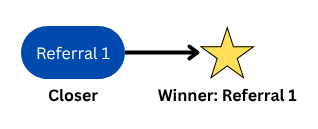
Percorso a una sola fase
Nello scenario più semplice, un cliente fa clic su un link di un partner e converte. Il *chiusore* quindi ottiene l'attribuzione. Sia il *numero di clic partecipanti* e il *numero di partecipazioni* sono 1.
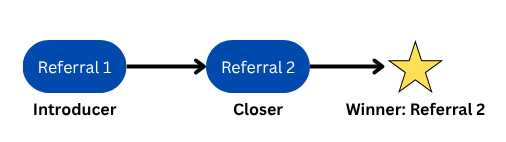
Percorso in due fasi (un partner)
In questo percorso, un cliente fa clic due volte sui link dello stesso partner, che agisce sia come *presentatore* (primo clic) sia come *chiusore* (secondo clic). Il *chiusore* clic vince l'attribuzione. Il *numero di clic partecipanti* è 2, ma il *numero di partecipazioni* rimane 1, poiché è stato coinvolto un solo partner univoco.
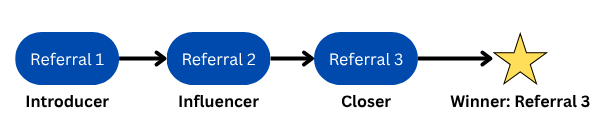
Percorso a 3 fasi (un partner)
In questo percorso, l'unico partner ricopre ora tutti i ruoli: *presentatore* (clic 1), *influencer* (clic 2) e *chiusore* (clic 3). Il chiusore vince, il *numero di clic partecipanti* è 3 e il *numero di partecipazioni* è 1.
Percorso a N fasi (un partner)
Questo generalizza la regola per qualsiasi numero (N) di clic dallo stesso partner. Il partner è coinvolto come il *presentatore*e in tutti i clic intermedi, e come il *chiusore*. Il *chiusore* (clic N) vince l'attribuzione. Il *numero di clic partecipanti* è N, ma il *numero di partecipazioni* è sempre 1, poiché c'è solo 1 partner.
Percorso a due partner
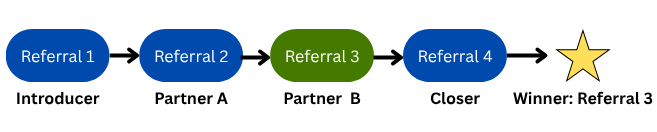
Quando sono coinvolti 2 o più partner, il *chiusore* non è sempre il *vincitore*. A uno dei due partner può essere assegnato il credito, a seconda di come sono definite le regole di attribuzione. Il Partner B potrebbe vincere anche se il Partner A fosse il *chiusore*.
Nel caso in cui il Partner A abbia 3 clic e il Partner B 1, il *numero di clic partecipanti* è 4, ma il *numero di partecipazioni* è solo 2 (uno per A, uno per B).
Percorso con più partner
Come nel percorso a due partner, il *vincitore* può essere un partner come il Partner B in base ai termini del contratto, non necessariamente il *chiusore* (Partner D). In un caso in cui ogni clic provenga da un partner unico, il *numero di clic partecipanti* (4) e il *numero di partecipazioni* (4) saranno uguali.
---
# Agent Instructions
This documentation is published with GitBook. GitBook is the documentation platform designed so that both humans and AI agents can read, navigate, and reason over technical content effectively. Learn more at gitbook.com.
## Querying This Documentation
If you need additional information that is not directly available in this page, you can query the documentation by asking a question.
Perform an HTTP GET request on the following URL with the `ask` and `goal` query parameters:
```
GET https://help.impact.com/brand/it/what-would-you-like-to-learn-about/platform-features/cross-channel-performance-insights/optimize-reports/optimize-metrics-explained.md?ask=&goal=
```
`ask` is the immediate question: it should be specific, self-contained, and written in natural language.
`goal` is what the user is ultimately trying to achieve, the reason they need the answer. Sharing it helps GitBook give you a better, more relevant answer. A goal is most helpful when it describes the outcome the user wants rather than restating the question. For example, with `ask=how do I create an API token`, a goal like `automate deployments from our CI pipeline` lets GitBook tailor the answer to that use case.
The response will contain a direct answer to the question and relevant excerpts and sources from the documentation.
Use this mechanism when the answer is not explicitly present in the current page, you need clarification or additional context, or you want to retrieve related documentation sections.